

Time, Effort, And Hope (Podcast)
7 hours ago


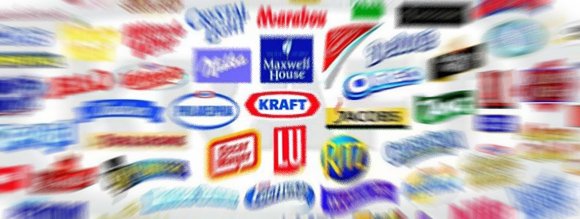
If one were to carefully study the labels on packaged products in an average grocery store, one would probably notice that the same company names appear repeatedly: Nestlé, Kraft, General Mills and a few others. Many brands offering good ol’ fashioned homemade or all-natural/organic foods are nothing more than subsidiaries of these few world-wide mega-companies. The major difference between the main brand and the subsidiaries is packaging and advertising, which are targeted to reach different markets. In order to preserve the carefully crafted image surrounding a product, connections to the mother company are often conveniently hidden.
The processed-food industry can be considered a true oligopoly. Together, the three leading food companies, Nestle, Kraft Foods and PepsiCo, achieve a dominant proportion of global processed-food sales. In fact, these three companies are often used as an example of “Rule of Three” in business schools, since they are a real-life example of a market being dominated by three gigantic actors. Their position as worldwide food providers has made these conglomerates extremely powerful, and they are represented in most elite organizations such as the Council of Foreign Relations. This not only allows them to provide their preferred policies on nutrition and health issues across the globe, but on economic, political and social issues as well. Such prominence also allows these companies to ensure their continued market dominance, through policy-making, access to insider information and the intimidation of potential competitors.
Today, if a small food company were to create a new revolutionary product, it would find it difficult to obtain distribution without giving up its rights to one these conglomerates. In addition to dominating the shelves, the Big Three control most of the worldwide channels of distribution, to the point that up-and-coming companies cannot reach the consumers without dealing with them. The only way small business owners can avoid years of struggle and rejection to obtain shelf-space in supermarkets is to strike a licensing deal with one of the giants, where the owner cedes the ownership and the rights to the product in exchange for royalty checks (which are usually a small percentage of the sales). Each licensing deal consolidates these companies’ position and eliminates threats from any potential competitor who creates game-changing products.
...in order to keep consumers coming back to their specific brand, corporations invest billions of dollars in the second secret of success: “brand loyalty” achieved through marketing and advertising.
Irrational Advertisement
While the ultimate goal of an advertisement is to sell a product, PR firms will tell you that they are seeking to go way beyond the cheap sell. Their mission is to create an emotional attachment to a product, a concept that is totally irrational, yet extremely effective. They don’t just want you to like their product, they want you to identify with it. They want you to define yourself by it. They are looking to create loyal, life-long customers by creating an image, a lifestyle and even a philosophy around a product.
For marketers, mothers are a dream. They have an enormous weak spot: children, especially their own. This love for kids is not rational: the maternal instinct is one of humanity’s most primal and hormonal reflexes. To tap into it is to directly tap into a mother’s internal hard-wiring. Through the use of research and focus groups, advertisers have learned the most effective ways to get reactions out of mothers, and create targeted ads that make mother’s feel worried, moved, scared, angry or unsettled. Once the target is in the intended emotional state, the product is presented as the answer to everything.
Why should one care about which company sells which product? Primarily, it is a question of health. Almost all of the hundreds of products cited in this article contain toxic ingredients, from excessive amounts of saturated fat to additives like MSG, High Fructose Corn Syrup (HFCS), mercury and/or aspartame.
These substances, and many more like them, are poisonous to the body, the nervous system and the brain (as discussed in the article Dumbing Down Society: Food, Beverages and Meds). Processed foods are making the entire world fatter, sicker and dumber, even though only a few companies produce them. It is vital to know and recognize them … so you can avoid them. It is also important to recognize the basic marketing tactics that are being used to push consumers to buy processed foods.
The issue is much larger than individual health, however. To be aware of the companies selling your food is to be aware of important actors of the world elite. As the saying goes “control the food and you control the people”. If you believe it is important to know the truth about the world’s power structure, it is fundamental to know about these companies and understand their extensive reach throughout all areas of our global society. They might “only” sell food, but their power and position gives these conglomerates an active role in world governance, including economy, politics, law-making and even the military (who do you think supplies military mess halls?). The Big Three and globally dominant corporations like them are part of policy-setting “think tank” organizations such as the Council on Foreign Relations and the Bilderberg Group, which serve as the true motors behind global change. Should PepsiCo have a say in the invasion of a country such as Iran? Well, it does. And every time you buy a Pepsi or a bag of Doritos or jug of Tropicana, you are helping them become richer and more powerful. Luckily, however, there is an easy way to stop supporting these companies: Simply replace the processed products you buy from these companies with fresh foods bought from local businesses. You’ll improve your health and your local economy, but most importantly, you’ll also become the elite’s worst nightmare: a rational consumer.


