|
| I'm sure the Tipplers of their era were heartbroken... |
Of the several pieces I've written previously on the topic of the positive benefits of the consumption of alcohol, I'm actually a bit surprised that no teetotaler advocates have shown up before to register their objections to my assertions. Finally,
one showed up.
"If alcohol was invented
tomorrow it would , and rightfully so, be illegal." - Jace
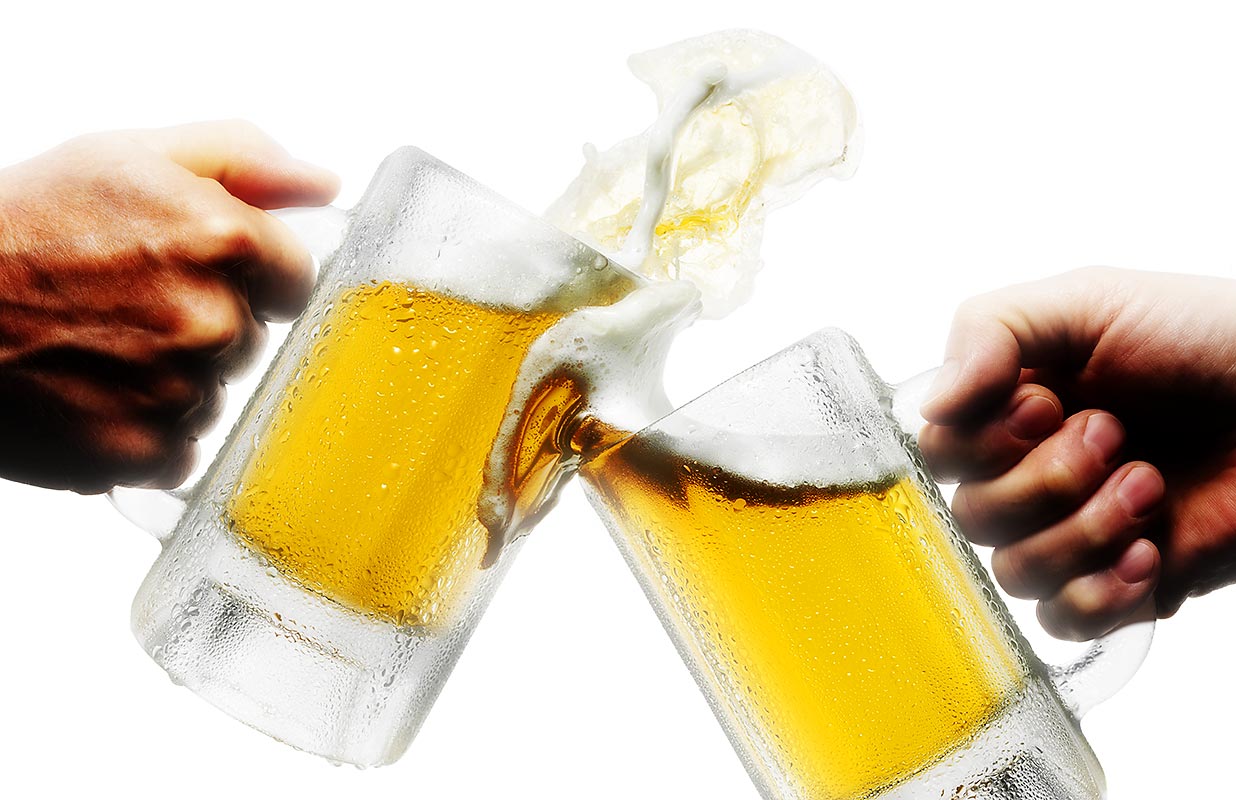
To which my initial urge to respond to Jace with a short quip, referencing the picture at the top of this post: "You forget, Jace. We've been there and done that." However, I assume most people that read this blog, are aware of the history of the temperance movement and the results of the Prohibition era in USA Inc.'s history.
And oh...by the way, on this date in 1933, the 21st Amendment to the Constitution was ratified, repealing the 18th Amendment
that instituted Prohibition. Now this is a date that should be declared a national holiday!
 |
| December 5th, 1933 Prohibition was repealed. CHEERS! |
After reading Jace's list of pro-teetotaler arguments, I started to respond, but realized a short comment was not enough to respond adequately. And since
I just learned that today was the 80th anniversary since prohibition was repealed, I thought this was the perfect topic for today's blog post.
"The myth that went around about a glass of wine being good for you was
due to the grapes and not the alcohol itself."
Oh it's no myth, alright. But I recall the whole "anti-oxidants" argument that wine was good for you. That may or may not be true, but the real story here is that the alcohol itself is good for you, and the benefits of moderate consumption apply, regardless of your drink of choice - wine, beer and/or distilled spirits.
Alcohol lowers blood pressure, relieves stress and helps with relaxation. Studies also show it lowers the risk of heart disease, diabetes, obesity and osteoperosis...amongst other conditions. But don't take my word for it, have a look at this article and extensive footnotes citing research to make the case:
Alcohol: Problems and Solutions
-
The National Institute on Alcohol Abuse and Alcoholism has
found that the lowest death rate from all causes occurs at the level of
one to two drinks each day.10
-
Drinking alcohol in moderation (1-2 drinks per day for women
and 2-4 for men) was found to reduce risk of mortality significantly
according to meta-analysis of 34 studies of alcohol and total mortality
among 1,015,835 men and women around the world.11
-
An exhaustive review of all major heart disease studies found
that "Alcohol consumption is related to total mortality in a U-shaped
manner, where moderate consumers have a reduced total mortality compared
with total non-consumers and heavy consumers."12
- A Harvard study found the risk of death from all causes to
be 21% to 28% lower among men who drank alcohol moderately, compared
with abstainers.13
-
A large-scale study in China found that middle-aged men who
drank moderately had a nearly 20% lower overall mortality compared with
abstainers.14
-
Harvard's Nurses' Health Study of over 85,000 women found reduced mortality among moderate drinkers.15
-
A British analysis of 12,000 male physicians found that moderate
drinkers had the lowest risk of death from all causes during the 13
year study.16
-
A large study of about 88,000 people conducted over a period of
ten years found that moderate drinkers were about 27% less likely to die
during the period than were either abstainers or heavy drinkers. The
superior longevity was largely due to a reduction of such diseases as
coronary heart disease, cancer, and respiratory diseases.17
-
A twelve year long prospective study of over 200,000 men found
that subjects who had consumed alcohol in moderation were less likely to
die during that period than those who abstained from alcohol.18
-
A study of more than 40,000 people by the Cancer Research Center
in Honolulu found that "persons with moderate alcohol intake appear to
have a significantly lower risk of dying than nondrinkers."19
-
An analysis of the 89,299 men in the Physicians' Health Study
over a period of five and one-half years found that those who drink
alcohol in moderation tend to live longer than those who either abstain
or drink heavily.20
-
An Italian study of 1,536 men aged 45-65 found that about two
years of life were gained by moderate drinkers (1-4 drinks per day) in
comparison with occasional and heavy drinkers.21
-
A study of 2,487 adults aged 70-79 years, who were followed for
an average period of over five and one-half years, found that all-cause
mortality was significantly lower in light to moderate drinkers than in
abstainers or occasional drinkers (those who drank less than one drink
per week).22
-
A large prospective study found that older men consuming up to
about three drinks per day and older women consuming over one drink per
day had a dramatically lower risk of dying than did non-drinkers.23
-
A large study found that moderate drinkers, even after
controlling for or adjusting for numerous factors, maintain their high
longevity or life survival advantage over alcohol abstainers.24
-
A Danish study of about 12,000 men and women over a period of
20 years found that abstaining from moderate alcohol consumption is a
health and longevity risk factor. Choosing not to drink alcohol
increases the risk of illness, disease and death.25
-
A 14-year study of nearly 3,000 residents of an Australian
community found that abstainers were twice as likely to enter a nursing
home as people who were moderate drinkers. Drinkers also spent less
time in hospitals and were less likely to die during the period of the
study.26
-
A prospective study of middle-aged Chinese men found that the
consumption of two drinks per day was associated with a 19% reduction
in mortality risk. This protective effect was not restricted to a
specific type of alcoholic drink.27
-
Alcohol prevents more deaths than its abuse causes in the United
Kingdom, according to research from the London School of Hygiene and
Tropical Medicine.28
- Scientists at the University of London concluded that light
and moderate drinking saves more lives in England and Wales than are
lost through the abuse of alcohol. If everyone abstained from alcohol,
death rates would be significantly higher.29
-
The Cancer Council of New South Wales concludes that "If the
net effect of total alcohol consumption on Australian society is
considered, there is a net saving of lives due to the protective effect
of low levels of consumption on cardiovascular disease."30
Of course, and it can't be said enough, these benefits are based on
moderate consumption, and not binge drinking in excess with the sole purpose of getting trashed. As Jace commented:
"Its bad for mental
health and society as a whole. People will over indulge, no matter how
many times you say moderation."
I'll quote the following from
Alcohol is a medicine, in response:
"When a chemical, either found in nature or made in a laboratory, has beneficial effects for the human body, but also, potentially damaging or dangerous effects, we call that chemical a “medicine” and entrust its use to licensed medical practitioners with governmental laws overseeing public access."
Here's where I disagree with that. Alcohol is one of the safest medicines there is in terms of self-medication.
Like any medicine, dosage determines whether it is beneficial or detrimental to the person ingesting it. Take one or two Tylenol because you have aches and pains from a hard days work or a headache and you'll feel better.
Down 14 drinks in a single drinking session, and at worst, you have a hangover the next day.
Take 14 maximum strength OTC acetaminophen pills at one time, and you can literally die of liver failure.
So, while people
regularly die from liver failure due to taking too much acetaminophen, your average person today who gets a headache or has muscle soreness thinks nothing of taking a couple of pills. Nor do they think anything bad of anyone else who relies on moderate doses of acetaminophen to deal with the aches and pains of life. (Caveat: many liver failure cases are caused by a combination of taking acetaminophen and drinking alcohol....so obviously, if take Tylenol, don't drink, and if you drink, don't take Tylenol).
Yet, because a minority of people abuse alcohol -- and yes, despite the mass media and Public Service Announcements by the Government constantly highlighting the negative effects of the abuse of alcohol - the public perception seems to ignore the fact that the vast majority of people that do drink alcohol, do so moderately.
There are barely any warnings to the
negative effects of alcoholic beverages on the packaging, no caloric or
nutritional information.
Despite that, you seem to know all about the negative effects of the abuse (over dosage) of alcoholic beverages, no?
Tell you what though, I'd much rather be more concerned with the effects of drinking 14 drinks in an ill advised night of binge drinking than take 14 maximum strength Tylenol pills over the same time period!
Also, for someone who portrays such an
anti-government persona, alcohol companies have huge sway with lobby
groups.
Anti-Government persona? Me?
Seriously, I'm glad you brought this up, Jace. I got a lot of thoughts on the topic of the Government and the alcohol industry.
For starters, I lament the continued vertical integration of the alcohol industry on a global scale. Giant multi-national corporations have been buying out many previously successful, micro-brewed beers. Same goes for craft distillers of quality spirits and wineries are all being bought out, or merged into larger corporate entities.
In most cases, the buy out of small, independent brands has not been good for we, the consumers of alcohol with discriminating palates. There are a handful of brands of beer that have been bought out/sold out or sub-contracted out to the giant Brewing corporations like InBev, for which I noticed a distinct change in the taste and quality of the final beverage has changed, and not for the better.
Just like so many other things in our Brave New World Order, the illusion of choice is presented to the average consumer, but the reality is that most brands that USED to be products of smaller, independent brewery's have been bought out by the multinational corporations, and the quality of the beverages are inevitably compromised. Just off the top of my head are the beer brands I used to regularly buy and drink, that are all now owned by InBev - Beck's, St. Pauli Girl, Red Hook, Bass, Lowenbrau, Spaten, Rolling Rock, Stella Artois, Corona, Modelo, Labatt. Before they were all bought out, co-opted and assimilated, all these beers used to be produced by independent companies.
Funny thing is, I stopped buying and drinking most of those brands for a few years now...and it was not really a conscious decision based on my anti-multi-national corporate stance, either. In every one of those cases, I perceived a change in the taste of the beer, and knew something was different, but I couldn't put my finger on what exactly was wrong. I even thought that perhaps my taste buds had changed. Only later when I did some research as to why Red Hook, which used to be one of my favorite micro-brews, did I discover why the taste of Red Hook had degraded so much.
My first clue was walking into the store to buy a 12-pack, and seeing Red Hook packaging had changed.
Here's what the beer looked like when I first discovered it in college, when it quickly became my drink of choice:
Then one day, I went to my local grocery store and went to beer aisle shelf where I had become accustomed to finding my usual, only to see this:
Huh? Ok....must be trying for a new look to create better marketing appeal. But then I noticed that the new bottles didn't taste exactly like I remembered it. It tasted less rich...a bit watery and less flavorful. At first, I thought it was simply my mind playing tricks on me. Perhaps it was just a psychosomatic effect because I preferred the old look of the packaging? But after drinking several six packs over the course of a few months, I couldn't help but realize the taste had indeed been changed. This was not my favorite beer!
So I logged on to teh Interwebz, fired up google and discovered exactly what happened. They got bought out by InBev. That's the first time I ever heard about that multi-national corporation that had been buying up breweries and brands all around the world.
Like almost any other consumable product, when a small-time, local producer gets bought out by a large, multi-national corporation, the product is invariably changed to meet the goals of corporate conformity: standardization, homogenization, and up-scaling the volume of production at a centralized facility to realize higher profits from economies of sale. I knew I was right that the taste had changed! Red Hook the original Seattle Micro-Brew? Now a sad memory. This mass produced, slickly-packaged and marketed substitute just was not the same!
I haven't bought a Red Hook since. I began to buy and drink other micro-brewed beers instead.
Then one day, another favorite micro-brew of mine came out with brand new packaging - Kona Brew.
The moment I tasted the new-look Kona Fire rock Pale ale, I knew exactly what happened. DAMN YOU InBev!!!! I knew it before I googled it...
This is what the bottling and labels looked like when Kona Brew was still an independent micro-brew, produced, bottled and distributed entirely in the State of Hawaii:
Kona Brew was initially a micro-brew made at the Kona Brew Pub on the Big Island and the Hawaii Kai Brew Pub on O'ahu. And in fact, if you go to either restaurant (I've been to both, multiple times), you can still get the original beers brewed right there on-site. But go to the store and buy a six pack of the exact same brand (yes, even the stores here in Hawaii....imagine that, shipping "Hawaiian Craft Beer" to Hawaii from a West Coast Mainland Brew Facility), and you can taste a huge difference between the mass-produced InBev botled beer made at one of InBev production facilities on the mainland, and the draft micro-brew still being produced in small quantities locally.
Here's the new look:
Now you can find Kona Brew all over the US. That's what getting bought out by a multi-national mega brewer like InBev can do for you when it comes to distribution and marketing. But the quality of the original product just cannot be duplicated by the giant corporate behemoth.
When I looked further into the topic, I discovered something: Hawaii does not have a glass production plant anywhere in the islands. All bottles used in local beverage productions are imported empty on shipping containers. Empty bottles are more fragile than full bottles, so it costs more to ship empty bottles. So that's one reason to shift bottled beer production to the mainland. But throw in the fact that Hawaii has one of the highest excise tax per 93 cents a gallon for packaged beer, and it's no wonder the owners of Kona Brew sold their soul to the corporate devil.
Now, Kona Brew in the bottle is brewed and bottled in Oregon, Washington (the now InBev owned and run Red Hook facility) and New Hampshire for East Coast distribution. Isn't corporate expansion and distribution awesome?!?!? Now you can buy "Hawaiian" micro brewed beer in about 25 States! Except, it's not really made in Hawaii...
Anyhow, all of this is just a really long way around getting to my original point...I believe moderate alcohol consumption is good for you, a medicine. One for which you can abuse, but that doesn't mean the medicine itself is to blame, but the person who is abusing it. Personal responsibility and all that.
And having the government involved in the industry involves all sorts of corruptions in both production and sale of this medicine.
Mass production by global corporations is a fact of life in the 21st century. The only truly meaningful vote we have in our "Democratic" society, is the votes we make with our fiat-dollars.So when I go to the grocery store or liquor store and do my part to participate in the all important exercise in FREEDOM, I cast my vote for the locally owned, independent breweries.
 |
| Hawaiian Craft Beer...Actually Made in Hawaii. STAY AWAY, InBev!! |